
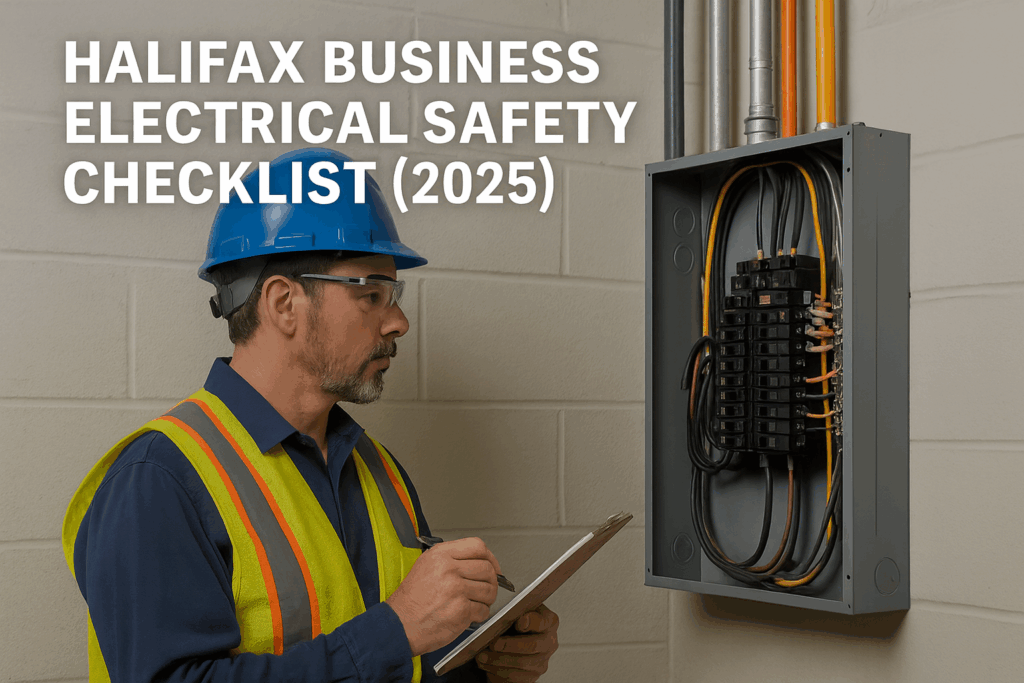
Halifax Business Electrical Safety Checklist (2025): Code, Compliance & Fire Prevention
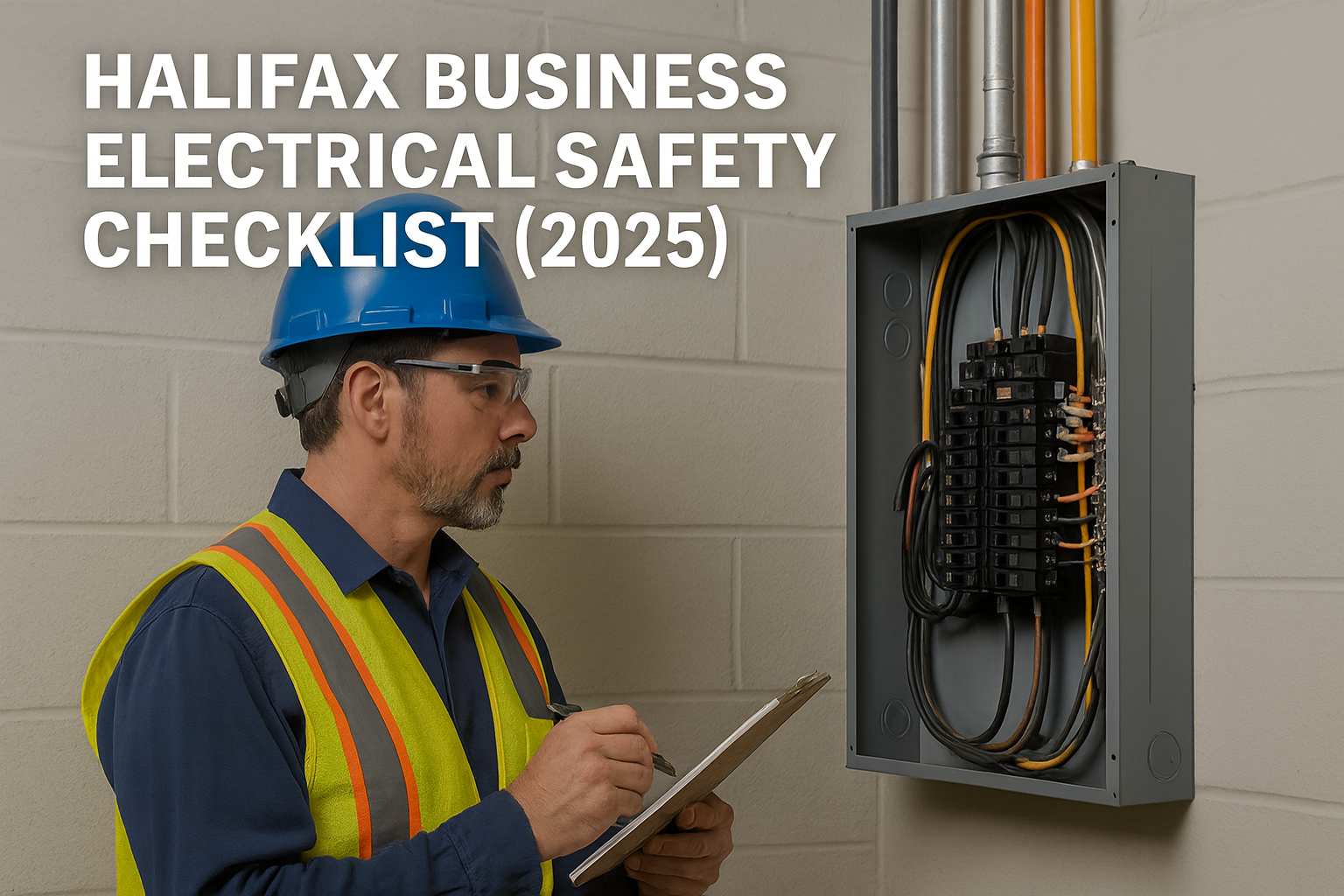
The Reality of Electrical Risks in Nova Scotia
In April 2024, The Brick was fined $125,000 for safety violations after an employee suffered a fatal fall in a dimly lit washroom at their Halifax location. This tragedy highlights how electrical safety failures directly endanger workers and expose businesses to massive liability.
Across Canada, the scope of electrical risks is staggering. Approximately one in five property fires stem from electrical causes, and power outages cost Canadian businesses up to $12 billion annually. These aren’t just statistics—they represent real businesses facing shutdowns, lost revenue, and devastated operations.
For Halifax and Dartmouth business owners, the risks hit even closer to home. Coastal conditions like salt air and humidity make electrical systems even more vulnerable to failure. Your business isn’t just competing with national statistics—you’re battling Mother Nature herself.
Understanding Nova Scotia’s Electrical Code Requirements
The Legal Framework
Nova Scotia businesses must follow the Canadian Electrical Code (CEC), adopted province-wide through the Electrical Code Regulations under the Electrical Installation and Inspection Act. These regulations mandate that all electrical installations be performed by qualified, licensed professionals under a wiring permit, with inspections conducted by authorized departments like Nova Scotia Power. For commercial spaces, key requirements include regular inspections, proper grounding, and installation of ground fault circuit interrupters (GFCIs) in wet areas to prevent shocks.


Key compliance requirements:
- All electrical work must be performed by licensed professionals
- Wiring permits required for installations
- Inspections conducted by authorized departments like Nova Scotia Power
- Regular maintenance and safety checks
What this means for your business: You can’t have your handyman rewire outlets or install new panels. Even minor electrical work requires proper permits and licensed contractors—but this protects you from liability and ensures insurance coverage remains valid.
Specifically, the CEC’s Section 2 outlines general rules for electrical safety, requiring employers to ensure installations comply to minimize hazards. In Nova Scotia, the Department of Labour, Skills and Immigration enforces this via the Occupational Safety General Regulations (Part 11: Electrical Safety), which stipulates that no person should work within 6 meters of energized overhead power lines without proper safeguards.
Halifax-Specific Challenges
Our coastal location creates unique electrical challenges:
- Salt air corrosion accelerates wiring degradation
- High humidity increases shock and fire risks
- Clay soil shifts in areas like Bedford can strain underground wiring
- Storm-induced power surges are common
For businesses, this means annual checks on panels and equipment, especially in high-risk environments like Bedford warehouses or Dartmouth offices exposed to clay soil shifts that can strain underground wiring.
Failure to comply can lead to fines or shutdowns. Prioritizing CEC compliance not only avoids penalties but also reduces insurance premiums—studies note that code-adherent businesses see lower claims. Always consult sources like the Nova Scotia Department of Labour’s electrical safety page for updates.


Your Complete Business Electrical Safety Checklist
Perform these inspections quarterly and document all findings. This demonstrates due diligence and helps identify issues before they become costly problems.
1. Electrical Panel Inspection
What to check:
- Panel accessibility and proper labeling
- Signs of corrosion (especially important in Halifax’s coastal environment)
- Circuit loading (CEC Rule 8-104 limits loading to 80% capacity)
- Arc-fault circuit interrupters (AFCIs) installation
Halifax tip: Storm-induced power surges are common—ensure your surge protection is adequate.
Bottom line: If your breakers keep tripping after storms, don’t ignore it—this is a warning sign of dangerous overload that could spark a fire.
2. Wiring and Outlets
Monthly GFCI testing:
- Press the “test” button on all GFCI outlets
- Required in wet areas per CEC Rule 26-700
- Critical in coastal humidity conditions
What this means: Every outlet near sinks, washrooms, or outdoor areas needs GFCI protection. Test monthly by pressing the “test” button—the outlet should shut off power immediately. If it doesn’t, call an electrician.
Bottom line: Testing your GFCIs monthly can prevent the kind of costly shutdown that halts retail stores mid-day—and could save lives.
Annual wiring inspection:
- Check for frayed wires and loose connections
- Identify outdated aluminum wiring (fire risk in older Dartmouth buildings)
- Ensure proper insulation and protection
Bottom line: Aluminum wiring in older buildings isn’t just outdated—it’s a fire hazard that insurance companies increasingly refuse to cover.


3. Lighting Systems
Safety checks:
- Fixtures properly secured
- Bulb wattage matches fixture ratings
- Consider LED upgrades (reduce fire hazards and qualify for Nova Scotia efficiency programs)
Bottom line: Overloaded fixtures cause 13% of electrical fires—but LED upgrades pay for themselves through rebates and reduced fire risk.
4. Emergency Lighting and Exit Systems
CEC Section 46 requirements:
- Battery backup must function for minimum 30 minutes
- Provide at least 10 lux at floor level
- Monthly testing required
For Halifax businesses: Blackouts from harbor winds make reliable emergency lighting crucial for safe evacuations.
Bottom line: When the lights go out during a storm, properly functioning emergency lighting is the difference between safe evacuation and tragedy.


5. Equipment and Appliance Safety
Annual equipment protocols:
- Tag and inspect all electrical tools and machinery
- Implement “inspected” labeling system with dates per Nova Scotia Labour guidelines
- Train staff to report unusual noises, smells, or performance issues
- Use commercial-grade surge protectors
Avoid common violations:
- Never daisy-chain extension cords (violates CEC Section 12)
- Unplug unused devices to prevent phantom loads
Bottom line: Extension cord violations are among the most cited electrical infractions—but also the easiest to fix before an inspector arrives.
6. Grounding and Bonding
Ensure all metal components are properly grounded per CEC Section 10. This is especially critical in Halifax’s salty air environment, which accelerates corrosion.
Bottom line: Poor grounding in coastal environments doesn’t just risk equipment damage—it can electrocute employees and customers.
7. Fire Alarms and Extinguishers
Integrate electrical systems with fire detection; ensure alarms are hardwired with battery backup as per CEC requirements.
Bottom line: Battery-only fire alarms fail when you need them most—hardwired systems with backup ensure protection even during power outages.

Quick Reference Safety Table
[Infographic suggestion: Visual checklist format with icons for each inspection type]
| Check Item | Frequency | CEC Reference | Halifax-Specific Notes |
| Panel Overload Check | Quarterly | Rule 8-104 | Monitor for storm surges |
| GFCI Testing | Monthly | Rule 26-700 | Essential in coastal humidity |
| Emergency Lighting Test | Monthly | Section 46 | Critical during fog/storms |
| Wiring Inspection | Annually | Section 2 | Watch for salt air corrosion |
| Surge Protection Review | As Needed | Rule 26-710 | Protect against power fluctuations |
This table draws from authoritative sources like the CSA Group’s CEC handbook and Nova Scotia Power’s inspection bulletins.

When to Call a Professional Electrician
Don’t attempt DIY electrical work. Nova Scotia’s wiring permit system requires licensed professionals for any modifications.
Call immediately if you notice:
- Flickering lights or dimming
- Frequently tripping breakers
- Burning odors or unusual sounds
- Warm outlets or switch plates
- Mild electrical shocks from appliances
Local expertise matters: At DLL Renovations, we understand Halifax’s unique challenges—from clay soil affecting foundations to coastal corrosion impacting wiring systems.
Real-World Safety in Action
Employee Training Requirements
Under Nova Scotia’s Occupational Safety General Regulations, employers must provide electrical safety training.
Essential training topics:
- Lockout/tagout procedures (CEC Appendix C)
- Hazard recognition and reporting
- Basic electrical safety awareness
- Emergency response procedures
Resources: Use Canadian Centre for Occupational Health and Safety modules tailored for Nova Scotia businesses.


What Halifax Businesses Are Saying
“DLL’s electrical safety audit kept our Halifax retail store running smoothly after identifying hidden wiring issues. Their quick response prevented a potential outage during peak season!”
— John D., Downtown Halifax business owner
Frequently Asked Questions
Q: What electrical inspections are legally required for NS businesses?
A: Annual inspections per CEC and Nova Scotia Labour regulations, focusing on panels, wiring, and GFCI systems.
Q: How much does a commercial electrical audit cost in Halifax?
A: Typically $300–$800 depending on facility size, but this investment prevents costly fines and operational losses.
Q: Are there rebates for electrical safety upgrades?
A: Yes, Efficiency Nova Scotia offers programs for energy-efficient lighting and surge protection systems.
Q: What happens if my business fails an electrical inspection?
A: Address violations immediately. Re-inspections ensure compliance before you can resume full operations.
Q: Who enforces electrical safety regulations in Nova Scotia?
A: The Department of Labour, Skills and Immigration oversees compliance through workplace inspections and violation penalties.
Q: What’s the penalty for electrical code non-compliance?
A: Fines range from hundreds to hundreds of thousands of dollars (like The Brick’s $125,000 penalty), plus potential business shutdowns.
Ready for a professional assessment that ensures compliance and prevents costly surprises?
Contact DLL Renovations today for reliable electrical service in Halifax.
👉 Click here to request a free quote or call us at (902) 346-2008.
Coming Soon from DLL Renovations:
- October article: Holiday Lighting Safety in Halifax: Avoid Overloads, Fires, and Fines
- November article: Smart Home Electrical Upgrades: Boost Comfort and Efficiency in Halifax Homes
Previous Articles from DLL Renovations: